The Translation That Made a Scholar Weep — and What It Reveals About Every Translation
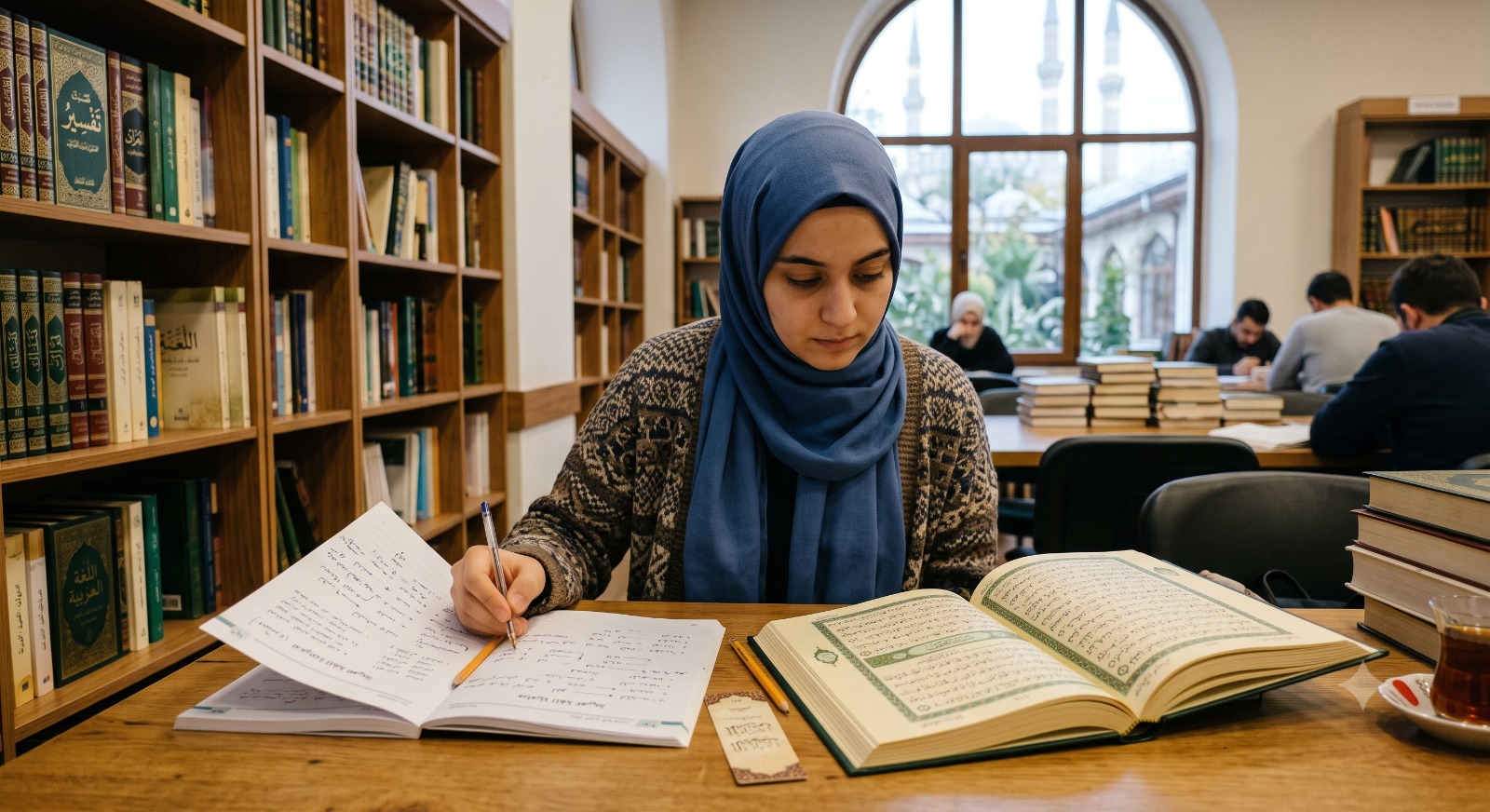
Khaled was a second-generation Egyptian-American, thirty-six years old, teaching Islamic studies at a university in Chicago. He had grown up reading the Quran in English translation. He had a PhD. He had published papers on Islamic theology.
Then, in 2019, he spent six months intensively studying Classical Arabic grammar. Not conversational Arabic. Not Modern Standard Arabic. The specific grammatical and rhetorical system of the Quran itself.
He called what happened next “an epistemological crisis.” The first surah he reread in Arabic after completing that foundational study was Al-Fatiha — a surah he had recited thousands of times in prayer, read in dozens of English translations, and taught to students for years.
“I understood for the first time,” he told me, “that I had never read Al-Fatiha before. I had read descriptions of Al-Fatiha. They are not the same thing.”
This guide does not argue that translations are useless. They are valuable. But there is a dimension of Quranic understanding that translation structurally cannot access — and most people who rely on translations alone have no idea what they are missing. Let’s change that.
What Makes Arabic Different from Every Other Language the Quran Could Have Been Revealed In?
Arabic is not simply the language the Quran happens to be written in. The Quran explicitly identifies its Arabic nature as integral to its character: “Indeed, We have sent it down as an Arabic Quran so that you might understand” (Surah Yusuf, 12:2). This is not a logistical note. It is a statement about the relationship between the language and the meaning.
Classical Arabic — the Arabic of the Quran — is a root-based language with a depth of derivational structure that has no equivalent in English, French, Urdu, or any other language most Muslims in the West encounter daily. Every Arabic word derives from a three-letter root (almost always), and that root carries a semantic field — a cluster of related meanings — that the derived word activates in the reader’s mind simultaneously.
The word “Sabr,” translated universally as “patience,” derives from a root meaning to confine or hold back. It specifically connotes active restraint under pressure — not passive waiting, but the deliberate holding of oneself within appropriate behavior while experiencing difficulty. The English word “patience” carries none of this structural weight. When you read “be patient” in translation, you receive approximately 40% of what “isbiru” communicates in Arabic.
Multiply this across 6,236 verses. The cumulative gap between what translation communicates and what the Arabic text communicates is not a small percentage. It is the difference between reading a map and walking the terrain.
Why Translation Is Structurally Incapable of Conveying What Arabic Carries

Here is the blunt truth that most Islamic education avoids saying directly: every English translation of the Quran is simultaneously a translation and an interpretation. The translator makes hundreds of choices per page that reflect their understanding, their scholarly tradition, their linguistic background, and their theological orientation. Those choices are invisible to the reader who has no Arabic.
Consider Surah Al-Ikhlas (112:2): “Allahu As-Samad.” This is translated variously as “Allah, the Eternal Refuge,” “Allah, the Self-Sufficient,” “Allah, the Everlasting,” and “Allah, upon Whom all depend.” Every one of these translations captures a dimension of As-Samad. None of them captures all of it. As-Samad in Classical Arabic denotes a being who is complete in themselves, to whom all creation turns in need, and who is not in need of anything in return. The word simultaneously conveys absolute self-sufficiency, universal dependency of others upon this being, and impenetrable wholeness. There is no single English word or phrase that holds all three simultaneously.
The reader of any one translation receives one translator’s best approximation of a word that requires all of them — and still falls short.
This is not a criticism of translators. It is a structural feature of translation across any language pair when the source language has greater semantic density than the target language. The Quran is linguistically the most semantically dense text in the Arabic literary tradition. The translation gap is consequently larger for the Quran than for virtually any other Arabic text.
What Specifically Changes When You Learn Quranic Arabic?
The changes that come with Arabic literacy are not abstract. They are specific, replicable, and consistently reported by practitioners who make this transition. Here is what actually shifts.
The first change is grammatical precision. Arabic grammar encodes meaning that English expresses through separate words or fails to express at all. Arabic verbs contain person, gender, number, and tense simultaneously. The subject of a sentence can be embedded in the verb ending, making word order carry emphatic weight rather than merely organizational function. When the Quran says “Iyyaka na’budu” (You alone we worship) rather than “Na’buduka” (We worship You), the fronting of “Iyyaka” is grammatically emphatic — it signals exclusivity and priority. This is felt immediately in Arabic. In translation, it often becomes a footnote, if it appears at all.
The second change is rhetorical awareness. The Quran is widely recognized as the pinnacle of Arabic literary achievement — including by pre-Islamic Arabs who were hostile to its message but could not deny its linguistic force. The rhetorical techniques of the Quran — its use of assonance, rhythm, internal rhyme, and what classical scholars called i’jaz (inimitability) — are entirely invisible in translation. The experience of reading a translated verse and the experience of hearing the same verse recited in Arabic by a skilled reciter engage fundamentally different cognitive and emotional systems.
The third change is the discovery of connections across the text. Arabic root patterns create a network of semantic resonance across the Quran that translations fragment. The root R-H-M appears in Al-Rahman, Al-Raheem, Rahma, Arham — mercy, womb, compassion, kinship. These words are connected in Arabic in a way that makes the Quranic discussion of divine mercy and human kinship feel like a single unified theme. In English, they appear as separate vocabulary with no visible connection.
Do You Need Fluency in Arabic, or Is Some Knowledge Enough?
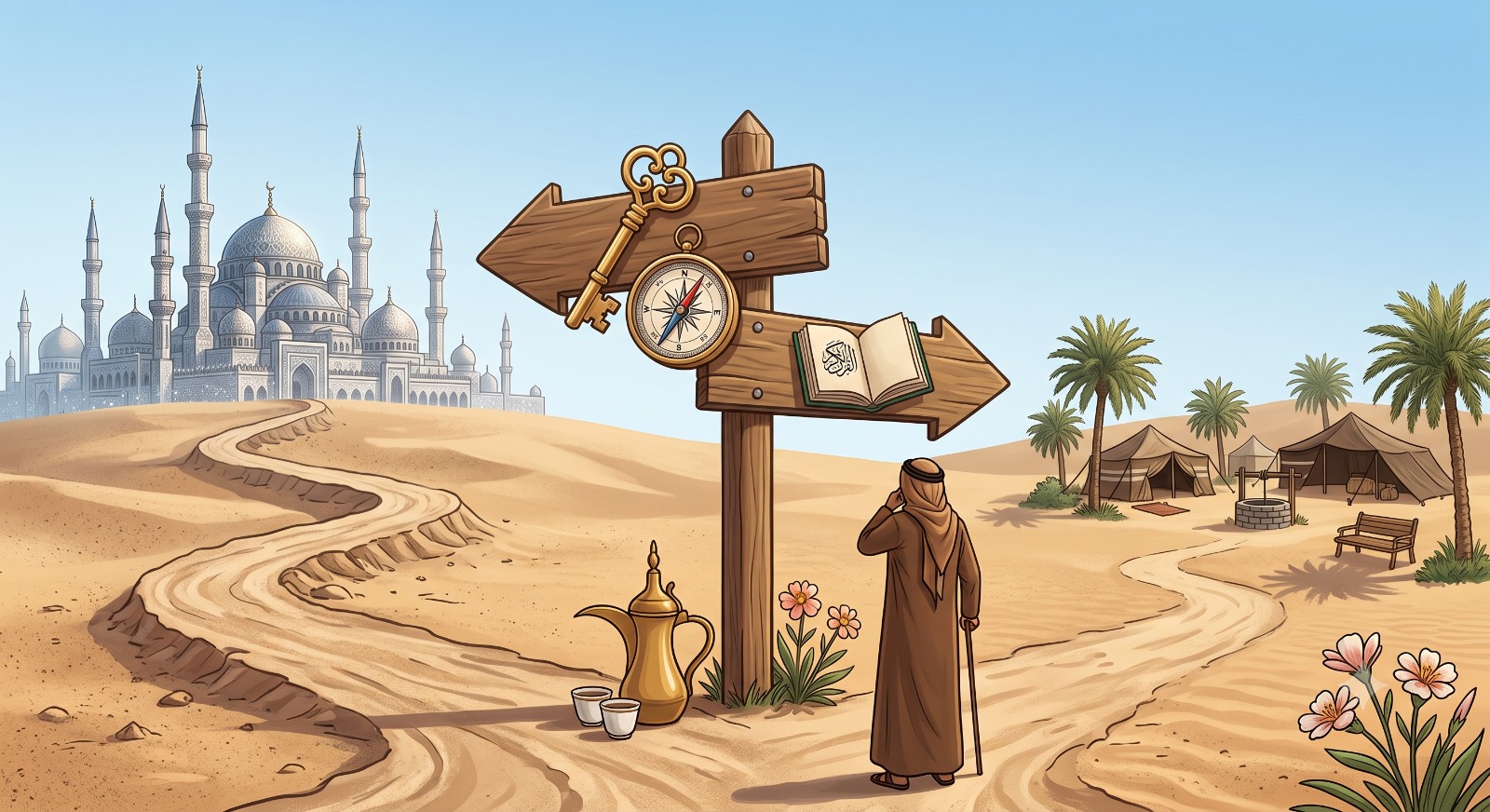
This is the question I get asked most, and my answer has changed significantly over the years. I used to think that partial Arabic knowledge was barely better than no Arabic knowledge. I no longer believe this.
Here is the more accurate picture: meaningful Quranic Arabic comprehension exists on a spectrum, and every stage of that spectrum produces real, compounding benefits. You do not need to be fluent in Modern Standard Arabic or conversational in any Arabic dialect. What you need is specifically Quranic Arabic literacy — and that is a distinct and more accessible target than general Arabic fluency.
The vocabulary of the Quran contains approximately 1,750 unique root forms. The 500 most frequent roots cover roughly 80% of the Quranic text. This means that a learner who masters the 500 most common Quranic roots — combined with basic Arabic grammar fundamentals — can read the majority of the Quran with meaningful comprehension in twelve to eighteen months of consistent study.
This is not a fluency claim. It is a functional Quranic literacy claim. And functional Quranic literacy changes the experience of recitation, prayer, and study in ways that are immediate and profound.
Khaled, the scholar from our opening, did not become a native Arabic speaker. He became someone who could engage with the Arabic text directly, consult multiple interpretations with informed judgment, and experience recitation as communication rather than phonetics. That is the meaningful threshold, and it is genuinely reachable.
The Best Resources for Learning Quranic Arabic in 2025
The landscape of Quranic Arabic education has improved dramatically since 2018. Here is an honest assessment of what works.
Bayyinah TV, developed by Sheikh Nouman Ali Khan, is the resource I recommend most consistently for English-speaking beginners. The “Dream” program is a structured Quranic Arabic curriculum that begins with Arabic morphology (sarf) before grammar (nahw), which is pedagogically sound. Monthly access costs approximately $11, making it the best value structured course available. Weakness: it requires significant self-discipline as an asynchronous program, and learners without accountability tend to plateau around the six-month mark.
The Bayyinah Institute’s in-person “Dream” program — offered periodically in major US cities — costs approximately $800–1,200 for an intensive weekend or week-long format. For those who need structured accountability, this is worth every dollar. The combination of in-person instruction, peer community, and Sheikh Nouman’s explanatory style produces results that the online version cannot fully replicate.
Quranic (the app) offers a Word-by-Word Quran feature that is genuinely excellent for connecting Arabic text to meaning during recitation. At approximately $20/month premium, it allows learners to hover over any word and see its root, meaning, and grammatical function. This is not a substitute for formal Arabic study, but it dramatically accelerates vocabulary acquisition when used daily alongside recitation.
Arabic Pod 101 and Pimsleur Arabic target Modern Standard or colloquial dialects rather than Classical Arabic specifically. I recommend against these for learners whose primary goal is Quranic comprehension — they build vocabulary and pronunciation habits that do not transfer cleanly to Quranic text and can actually create interference.
The “Madinah Arabic Reader” series — a traditional curriculum developed at the Islamic University of Madinah — remains one of the most rigorously structured Classical Arabic programs available. It is less user-friendly than Bayyinah TV for independent learners, but for those with a teacher or structured class, it provides the grammatical depth that modern apps cannot match.
For children, the Arabic Seeds curriculum (approximately $25/month) takes a play-based approach to Classical Arabic for ages four to twelve that several families I’ve spoken with describe as remarkably effective, particularly for children who are simultaneously learning to recite.
The Confession: What Years of Translation-Reliance Actually Cost Me
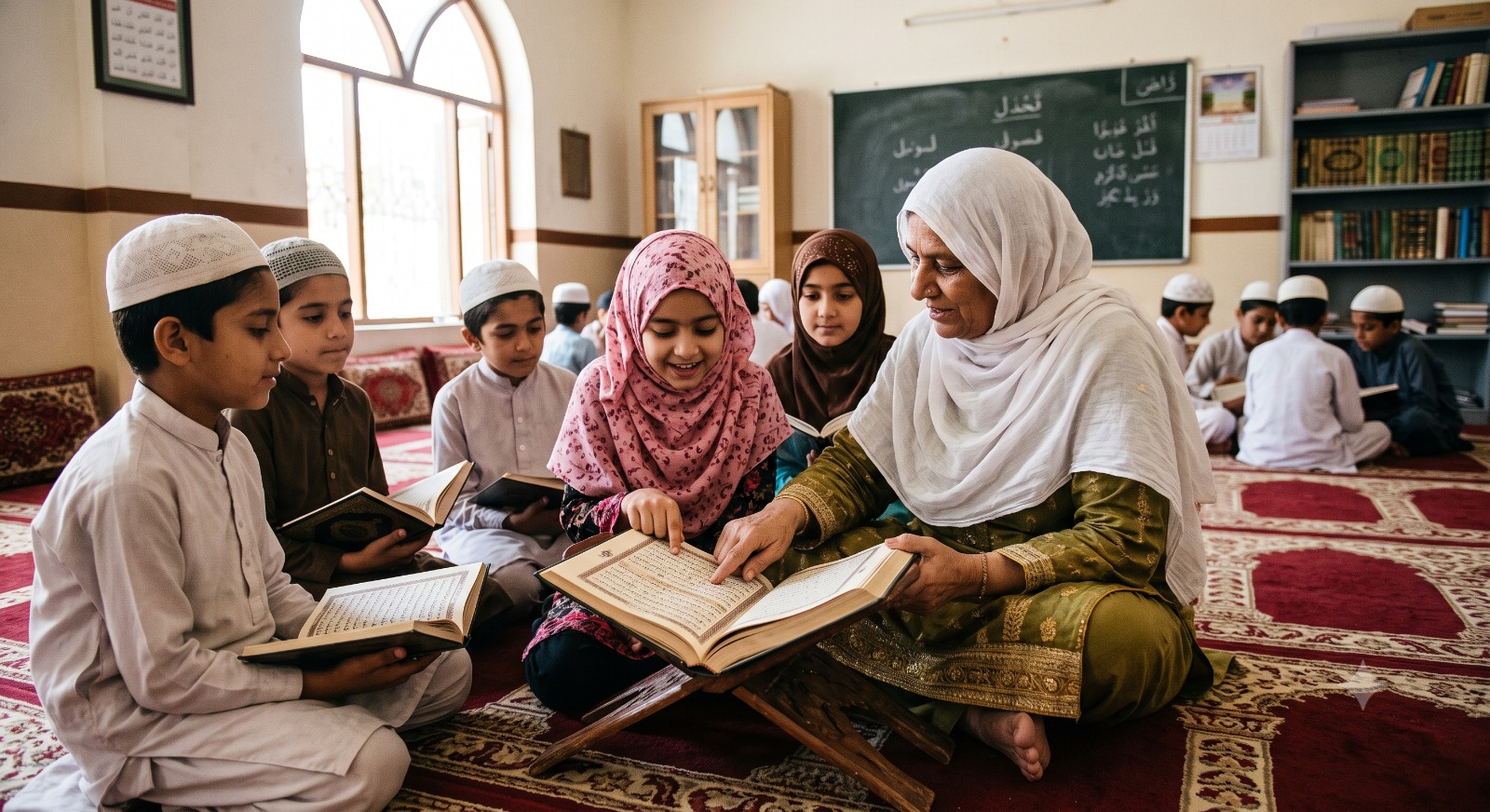
I want to be honest about something that most Islamic education content avoids: reading the Quran exclusively in translation for years created habits of interpretation that required active work to unlearn.
When you read a translation long enough, you stop experiencing the translated text as a translation. It becomes the Quran in your mind. The translator’s interpretive choices become your Quranic understanding. And because you have no Arabic access point, you have no way of knowing which of your understandings are rooted in the text and which are rooted in one scholar’s reading of the text.
Three specific examples from my own experience. The word “Tawbah” is routinely translated as “repentance.” This is accurate as far as it goes. But the Arabic root means to turn — and the Quran uses the same root for both the human turning toward Allah and Allah’s turning toward the human. This reciprocal structure of Tawbah — embedded in the Arabic word form — transforms the theological understanding of repentance from a human action to a relational dynamic. I did not understand this from any translation I read. I discovered it in the second month of Arabic study.
Similarly, “Khashya” (awe or fear of Allah) and “Khawf” (fear) are both translated as “fear” in most English versions, despite carrying significantly different weight in the Arabic. Khashya is specifically the fear of one who knows — the more deeply you understand something’s reality, the more Khashya you have of it. This is why the Quran states that the scholars of creation have the greatest Khashya of Allah. This nuance is invisible in translation and fundamentally changes the understanding of what knowledge is supposed to produce in a believer.
How to Start Learning Arabic for Quranic Understanding Right Now
The strategic starting point is not what most people expect. Do not begin with the Arabic alphabet — most Muslims can already read Arabic phonetically for recitation. Do not begin with conversational Arabic phrases. Begin with morphology: the root system.
Spend your first four to six weeks on the concept of trilateral roots and the ten primary verb patterns (awzan). This is the master key to the entire language. Once you understand that every Arabic word is a predictable modification of a three-letter root according to a finite set of patterns, vocabulary acquisition becomes pattern recognition rather than pure memorization.
A practical six-month starting plan: Weeks one through six on root patterns and basic verb conjugation using Bayyinah TV or a structured curriculum. Weeks seven through sixteen on the 100 most frequent Quranic roots using Quranic app’s Word-by-Word feature during daily recitation. Weeks seventeen through twenty-four on nominal sentence structures and the most common grammatical constructions in Al-Fatiha and the short surahs of Juz Amma.
At the six-month mark, you will not be fluent. You will, however, be able to identify roots, recognize grammatical structures, and engage with commentary and tafsir with meaningful critical capacity. That is a transformation.
Frequently Asked Questions About Learning Arabic for the Quran

Is Quranic Arabic different from Modern Standard Arabic?
Yes, significantly. Classical Quranic Arabic predates Modern Standard Arabic by over a millennium and contains grammatical constructions, vocabulary, and rhetorical forms not present in contemporary usage. Learning Modern Standard Arabic helps with general comprehension but should not be confused with Quranic Arabic proficiency. Target your study specifically at Classical Arabic resources aligned with Quranic text.
How long does it take to understand the Quran in Arabic?
Functional Quranic literacy — enough to follow recitation with meaningful comprehension and engage critically with translation choices — takes twelve to eighteen months of daily study at thirty to forty-five minutes per day. Full independent reading with rich grammatical understanding takes three to five years. Neither timeline requires prior Arabic knowledge.
Can children learn Quranic Arabic and Modern Arabic simultaneously?
Yes, and early childhood is the ideal window. Children under twelve acquire language patterns with significantly less cognitive interference than adults. Programs like Arabic Seeds teach Classical Arabic roots and vocabulary that directly support Quranic comprehension while building a foundation for broader Arabic literacy.
Do I need to learn Arabic to receive reward for Quran recitation?
No. Islamic scholarship is clear that recitation carries reward regardless of comprehension, and that non-Arabs who struggle with Arabic pronunciation receive double reward for their effort. Arabic learning enhances understanding and deepens the quality of engagement with the Quran — it does not determine the validity or spiritual value of recitation.
Which Arabic dialect should I learn alongside Quranic Arabic?
None, if your exclusive goal is Quranic comprehension. Dialect study adds conversational utility but creates interference with Classical Arabic habits. If you want both conversational Arabic and Quranic Arabic, study them sequentially rather than simultaneously. Start with Classical, establish those patterns firmly, then add a dialect.
The Language That Was Chosen for a Reason
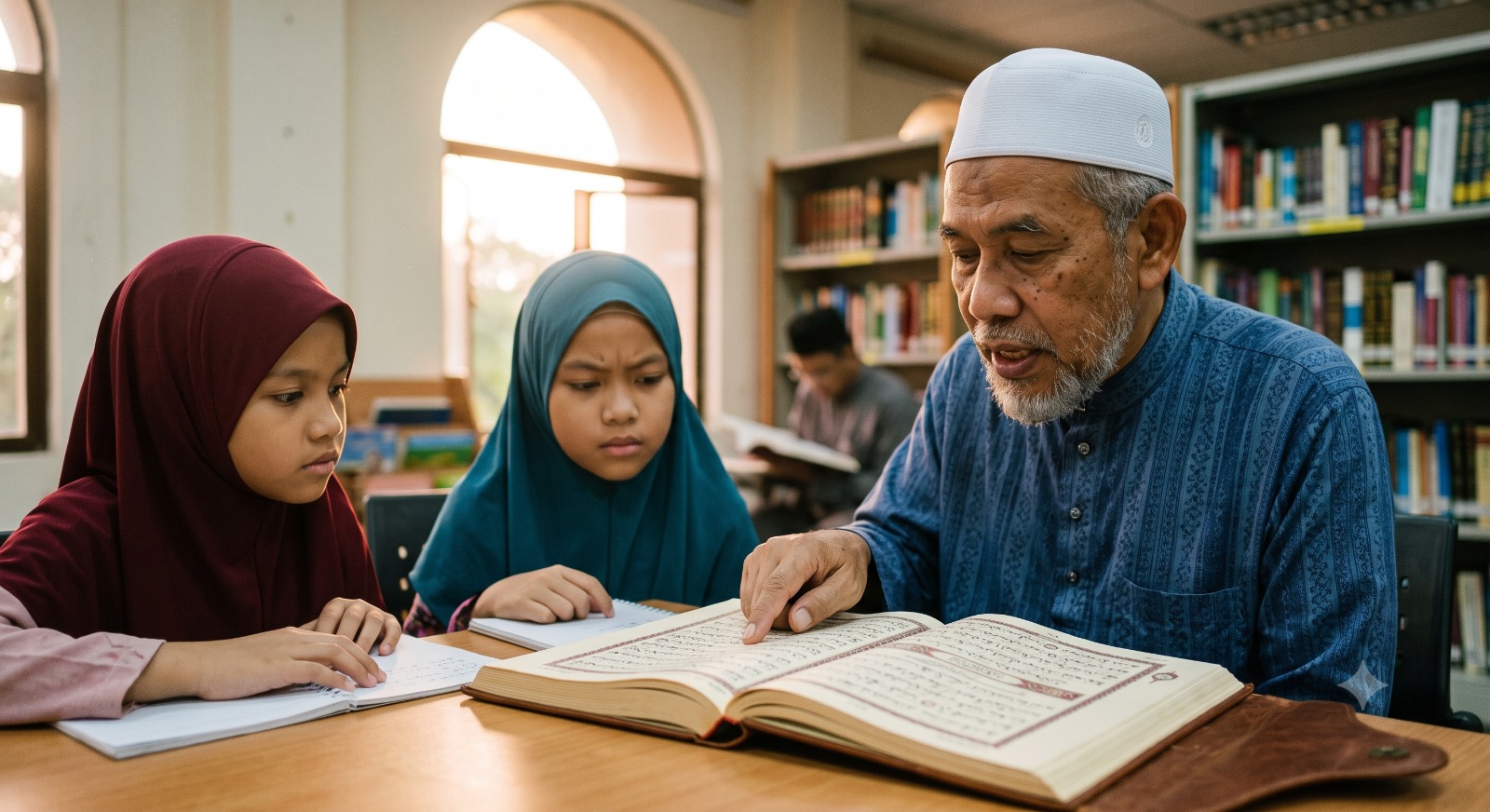
Khaled, the scholar from Chicago, told me something at the end of our conversation that I think about often. He said: “The Quran tells us it was revealed in Arabic so that we might understand. Not so that we might translate and then understand. The Arabic is not a container for the meaning. It is part of the meaning.”
That is the most precise statement of why learning Arabic is essential to understand the Quran that I have encountered. Translations are generous acts of scholarship. They make the Quran accessible to hundreds of millions of people who would otherwise have no entry point. They deserve gratitude and use.
But they are approximations. And the Quran was not sent as an approximation.
Start this week with one thing: download the Quranic app, enable Word-by-Word mode, and recite Al-Fatiha with it open. Look at each root. Feel the gap between what you thought you knew and what the Arabic is saying. That gap is exactly what Arabic study closes.
What has been your biggest barrier to learning Quranic Arabic — time, resources, or the sense that it’s too difficult to be worth attempting? I’d like to know, because each of those barriers has a specific solution that most people never discover.