

The Neuroscientist Who Started Reading Quran for Stress — and Got Something Far Bigger
Dr. Layla Hassan was not looking for spirituality. She was looking for sleep.
It was January 2021. She was a research neuroscientist in London, forty-one years old, running on four hours of sleep and three espressos a day. Her anxiety had reached a level that her own academic background made harder to manage — she knew exactly what cortisol was doing to her hippocampus and could not make it stop.
Her mother suggested she return to daily Quran recitation. Layla had not recited consistently since university. She started with ten minutes after Fajr. Just Al-Fatiha and a few short surahs. Nothing dramatic.
Eight weeks later, she described the change in terms she normally reserved for peer-reviewed findings: measurable, replicable, and inexplicable by any single mechanism she could identify. The anxiety had not disappeared. But something had shifted in how she related to it. The recitation had become, she said, “the one moment in the day where my mind actually stops arguing with itself.”
This guide explores what science and Islamic tradition together reveal about daily Quran recitation — and why the benefits are deeper, more specific, and more surprising than most people expect.
What Does Daily Quran Recitation Actually Do to the Brain?

The relationship between Quranic recitation and neurological function is more studied than most people realize. Research published in the International Journal of Psychophysiology found that rhythmic vocalization — the kind intrinsic to Quranic tajweed recitation — activates the parasympathetic nervous system and reduces activity in the amygdala, the brain’s primary stress-response region.
This is not unique to the Quran as a text. Rhythmic recitation of any meaningful content produces measurable physiological changes. But here is what is specific to Quranic recitation: the Arabic phonetic system — with its throat sounds, nasalized letters, and precise articulation points — requires a level of physical engagement that other languages do not. Producing letters like Ain, Qaf, and Ghunnah correctly engages muscles in the throat, jaw, and nasal cavity in ways that are, effectively, a form of controlled breathwork.
Controlled breathwork is one of the most evidence-based anxiety-reduction techniques in clinical psychology. The fact that correct tajweed inherently involves it is not coincidental to practitioners — it is considered part of the Quran’s design.
A 2018 study from the University of Malaysia found that Muslim patients who listened to or recited Quran for thirty minutes daily showed a statistically significant reduction in perceived stress scores over twelve weeks, compared to a control group. The effect size was comparable to results from established mindfulness-based stress reduction (MBSR) programs — which typically require eight weeks and trained facilitators.
How Does Reciting Quran Affect Mental Health Specifically?
The mental health benefits of daily Quran recitation operate through at least four distinct mechanisms, and understanding all four helps explain why the practice affects people differently depending on how they engage with it.
The first mechanism is attentional focus. Correct recitation demands complete cognitive presence. You cannot recite Surah Al-Baqarah accurately while thinking about a work email. The text requires your full attention. This enforced presence functions identically to mindfulness meditation — a practice with over forty years of clinical research supporting its effectiveness for depression, anxiety, and rumination.
The second mechanism is meaning engagement. Quran recitation with understanding activates different neural pathways than recitation without it. When a reader understands what they are saying — when the word “Al-Rahman” lands with its full weight of divine mercy — the emotional processing centers of the brain engage alongside the linguistic centers. This dual activation creates what psychologists call a “cognitive-affective integration” that purely cognitive practices do not produce.
The third mechanism is routine anchoring. Mental health research consistently identifies stable daily routines as protective factors against depression. The five daily prayers provide a structural rhythm, and Quran recitation connected to those prayers creates what behavioral scientists call “implementation intentions” — specific, time-anchored behavioral commitments that dramatically increase follow-through and reduce the cognitive load of decision-making.
The fourth mechanism is what Islamic scholars have always called shifa — healing — and what contemporary researchers might describe as meaning-making. The Quran explicitly describes itself as “a healing for what is in the breasts” (Surah Yunus, 10:57). The act of reciting words understood to come from Allah carries a psychological dimension that secular therapeutic modalities do not address: the sense that one’s suffering is witnessed, acknowledged, and accompanied by something greater than oneself.
What Are the Spiritual Benefits That Science Cannot Fully Measure?
Here is where I want to be intellectually honest about the limits of the research framing. Science measures observable effects. It cannot measure the nature of the relationship between a believer and the Divine — and any guide that reduces Quranic recitation entirely to its neurological benefits has missed the most important part.
The spiritual benefits of daily recitation are real, reported consistently across fourteen centuries of Islamic scholarship and the lived experience of hundreds of millions of Muslims. They include tawakkul — the specific quality of trusting Allah with outcomes — which practitioners describe not as passive resignation but as an active relinquishment of the exhausting human habit of trying to control what cannot be controlled.
Daily recitation also develops what classical scholars called khushu — a quality of heart-present engagement with worship that is distinct from emotional feeling. Khushu is not always emotionally intense. Sometimes it is quiet, steady, and almost invisible. But practitioners who develop it consistently describe it as the quality that makes the rest of daily life more navigable.
There is also the matter of barakah — divine blessing — which attaches to specific recitations in ways documented in hadith literature. The Prophet Muhammad (peace be upon him) described Surah Al-Mulk as protecting its reciter from the punishment of the grave. He described Ayat al-Kursi as the greatest verse in the Quran. He described Surah Al-Ikhlas as equivalent to a third of the Quran in reward. These are not metaphors. For believers, they are functional realities that shape daily recitation choices.
Which Surahs Carry the Greatest Daily Benefits?
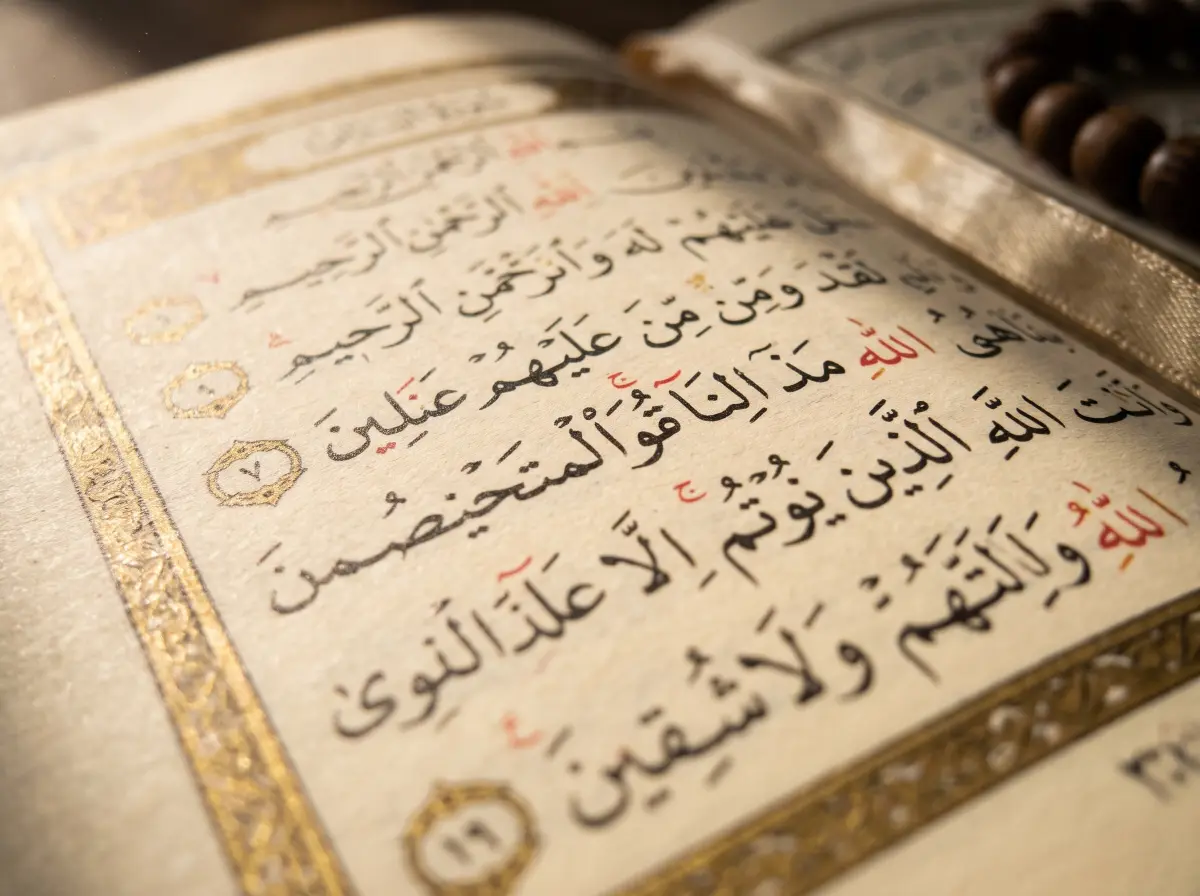
This question gets asked constantly, and I want to give you a genuinely useful answer rather than a generic list.
- For morning protection and daily intention — Ayat al-Kursi (2:255): The Prophet (peace be upon him) recommended reciting it after every obligatory prayer. This is perhaps the most universally practiced daily recitation in Islam, and its effects on establishing a sense of divine protection at the start of daily activity are reported across virtually all schools of Islamic practice.
- For anxiety and distress — Surah Ad-Duha (93): It holds a special place in Islamic tradition. It was revealed at a moment when the Prophet himself experienced what many scholars describe as a period of spiritual distress — when revelation paused and doubt crept in. Its opening verses are an explicit divine reassurance. Muslims experiencing anxiety, grief, or spiritual dryness consistently report that Ad-Duha recitation lands differently from other surahs — more personally, more immediately.
- For sleep and the transition into night — the three Quls (Al-Ikhlas, Al-Falaq, and An-Nas): Recited and blown over the hands then passed over the body, as the Prophet instructed, they represent one of the most widely practiced pre-sleep rituals in Islamic tradition. The neurological benefit of a consistent pre-sleep ritual is well-established independent of content. The spiritual benefit of these specific surahs, which address purification and divine protection from both external harm and internal spiritual disease, is reported by practitioners as qualitatively different.
- For those engaged in Hifz or serious memorization: Daily recitation of one’s memorized portions serves a double function: it maintains what has been learned and deepens the spiritual relationship with those specific verses through sustained repetition over years. If you are starting this journey, our Hifz-ul-Quran course is built around exactly this kind of daily revision.
Why Morning Recitation Outperforms Every Other Time Slot
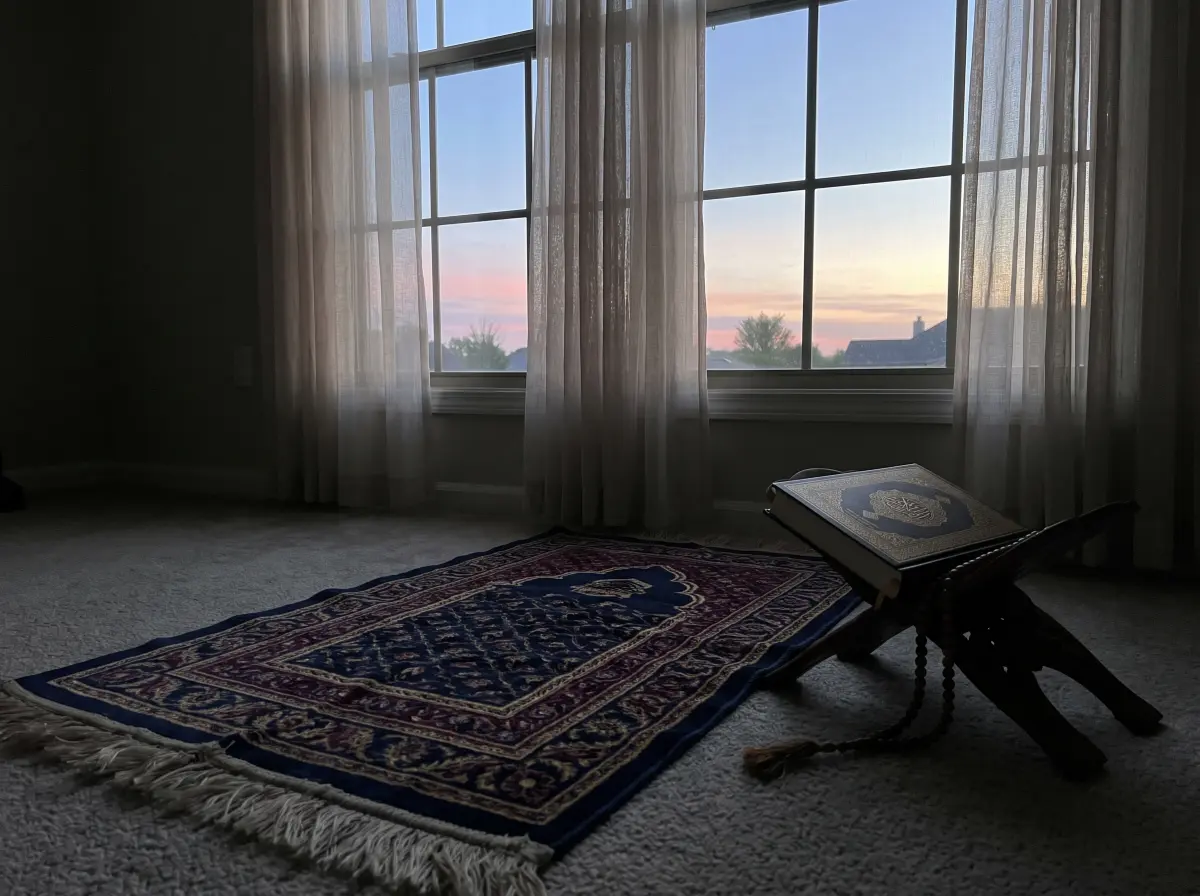
I have a strong opinion here, and I’ll defend it. Morning recitation — specifically after Fajr, before the day’s demands begin — produces effects that evening recitation cannot replicate, and the evidence from both Islamic tradition and behavioral science supports this clearly.
From an Islamic tradition perspective, the Quran specifically references the recitation of Fajr:
“Indeed, the recitation at dawn is ever witnessed.” (Surah Al-Isra, 17:78)
Scholars of tafsir interpret “witnessed” to mean attended by the angels of both night and day at the moment of Fajr — a specific spiritual quality attached to this time that no other recitation time carries.
From a behavioral science perspective, morning is when prefrontal cortex function — responsible for attention, emotional regulation, and executive control — is at its daily peak for most people. Cortisol, which peaks naturally in the first hour after waking, provides physiological alertness that supports focused engagement. Using this window for Quran recitation means engaging with the text at the moment of maximum cognitive and emotional receptivity.
The practical implication: if you currently recite only before sleep, you are getting real benefits. But if you want to experience the full spectrum of what daily recitation offers, the Fajr window is irreplaceable.
The Consistency Problem Nobody Talks About Honestly
Here is the admission I think every writer on this topic owes readers: building a consistent daily recitation practice is genuinely difficult, and most people who start will stop within thirty days.
I’ve spoken with enough people about this to know the failure pattern well. Week one is motivated and emotionally rich. Week two is steady but quieter. Week three hits a flat stretch where recitation feels routine rather than meaningful. Week four sees the first significant interruption — travel, illness, an exceptionally stressful day. Week five, the practice has often not resumed.
The traditional Islamic solution to this is one that modern habit research has independently arrived at: keep the practice small enough that the barrier to resumption is negligible. The Prophet’s instruction was explicit: “The most beloved deeds to Allah are the most consistent ones, even if small.” A person who recites five ayat daily for five years will have a more profound relationship with the Quran than someone who recites a full juz during Ramadan and then stops.
Small, protected, non-negotiable. That is the formula.
Specific practical applications: decide on a minimum daily recitation that you will maintain even on the worst days. For some people that is Al-Fatiha and the three Quls. For others it is a half page. The minimum is not the goal — it is the floor that prevents complete interruption. On good days you recite more. On hard days, you hit the floor and still maintain the streak.
The Recitation Tools Worth Using in 2025
For those wanting to deepen their daily recitation practice with structured support, several digital tools genuinely help without replacing the core practice.
- Tarteel AI (approximately $10/month) provides real-time recitation feedback that helps practitioners recite correctly — and correct recitation produces the physical and cognitive benefits described earlier in this guide. Reciting with significant tajweed errors is still valuable, but accurate recitation is measurably more effective across all dimensions.
- The Muslim Pro app (free, with premium at approximately $3/month) includes a daily wird (recitation portion) tracker, Quran audio from multiple reciters, and prayer time notifications that serve as natural recitation triggers. The audio library is genuinely useful for those learning surahs by listening before reciting independently.
- Quran.com remains the most comprehensive free web resource for translation, tafsir, and audio recitation. Its Word-by-Word feature is particularly valuable for those wanting to understand meaning alongside recitation — which, as discussed earlier, activates additional neurological pathways.
- Structured programs with live teachers — for memorization support alongside daily recitation, Mishkah Academy and Quran Academy both offer structured programs with live teachers. The discipline of regular teacher accountability significantly improves recitation consistency for many practitioners.
Frequently Asked Questions About Daily Quran Recitation Benefits
Does reciting Quran in Arabic benefit non-Arabic speakers who don’t understand the words?
Yes, with important nuance. The phonetic and rhythmic effects of correct Arabic recitation occur regardless of comprehension — the physiological benefits of controlled breathwork and focused attention are present whether or not the reciter understands the meaning. However, engaging with translation and tafsir alongside recitation activates the meaning-making mechanisms that produce the deeper psychological and spiritual benefits. Both dimensions matter, and one should not substitute for the other.
How long should daily Quran recitation last to produce noticeable benefits?
Research suggests fifteen to thirty minutes of consistent, focused recitation produces measurable stress-reduction effects within eight to twelve weeks. However, Islamic tradition prioritizes consistency over duration. Ten focused, daily minutes with strong presence produces more benefit than thirty distracted minutes. Start with what you can protect, then expand.
Can listening to Quran recitation replace active recitation?
Listening carries real benefits — there is a reason the Companions would gather to hear Quranic recitation and weep. But active recitation engages physical, cognitive, and spiritual dimensions that passive listening does not. Listening is valuable as a supplement and for those with physical limitations. It is not equivalent to recitation for those who can recite.
Does reciting Quran help with grief and bereavement specifically?
Multiple hadith indicate the recitation of specific surahs and ayat in contexts of grief — including Inna Lillahi wa Inna Ilayhi Rajiun (2:156). The combination of structured linguistic engagement, meaning confrontation, and spiritual connection makes recitation particularly valuable in grief. Several grief counselors working with Muslim communities in the United Kingdom have incorporated structured Quran recitation into bereavement support programs with positive reported outcomes.
Is there a benefit to reciting Quran aloud versus silently?
Both have Islamic precedent and application. Aloud recitation activates the physical, breathing, and vocal dimensions — producing the parasympathetic effects most strongly. Silent recitation (tilawah sirr) is appropriate in certain contexts and still carries full spiritual reward. The Prophet recited both ways. For daily practice with maximum physiological benefit, audible recitation — even at low volume — is preferable.
The Practice That Compounds Over a Lifetime
There is a dimension of daily Quran recitation that no single study can capture: the compound effect over years and decades.
A person who recites fifteen minutes daily for twenty years has spent approximately 1,825 hours in focused engagement with the words of Allah. Those hours change how they think, how they react to adversity, how they approach death, and how they understand their own interior life. The benefits are not static — they deepen and diversify with time in ways that cannot be predicted from the research on eight-week cohorts.
Dr. Layla Hassan, the neuroscientist from our opening story, continued her practice long after the initial stress reduction she was seeking. Two years later, she described it differently — not as a stress management tool, but as the foundation of a worldview. “I went looking for sleep,” she said. “I found something I didn’t have a name for in my research vocabulary.”
That is the honest, full-spectrum picture of what daily Quran recitation offers. The mental benefits are real and evidenced. The spiritual benefits are deeper and less measurable. Both are worth pursuing — and you do not have to choose between them. If you would like guided support, our Quran Reading course is a good place to build the habit with a teacher.
What draws you to daily Quran recitation right now — the spiritual dimension, the mental health research, or something you can’t quite name yet? I’d genuinely like to know, because the answer often reveals exactly where the practice needs to begin.