
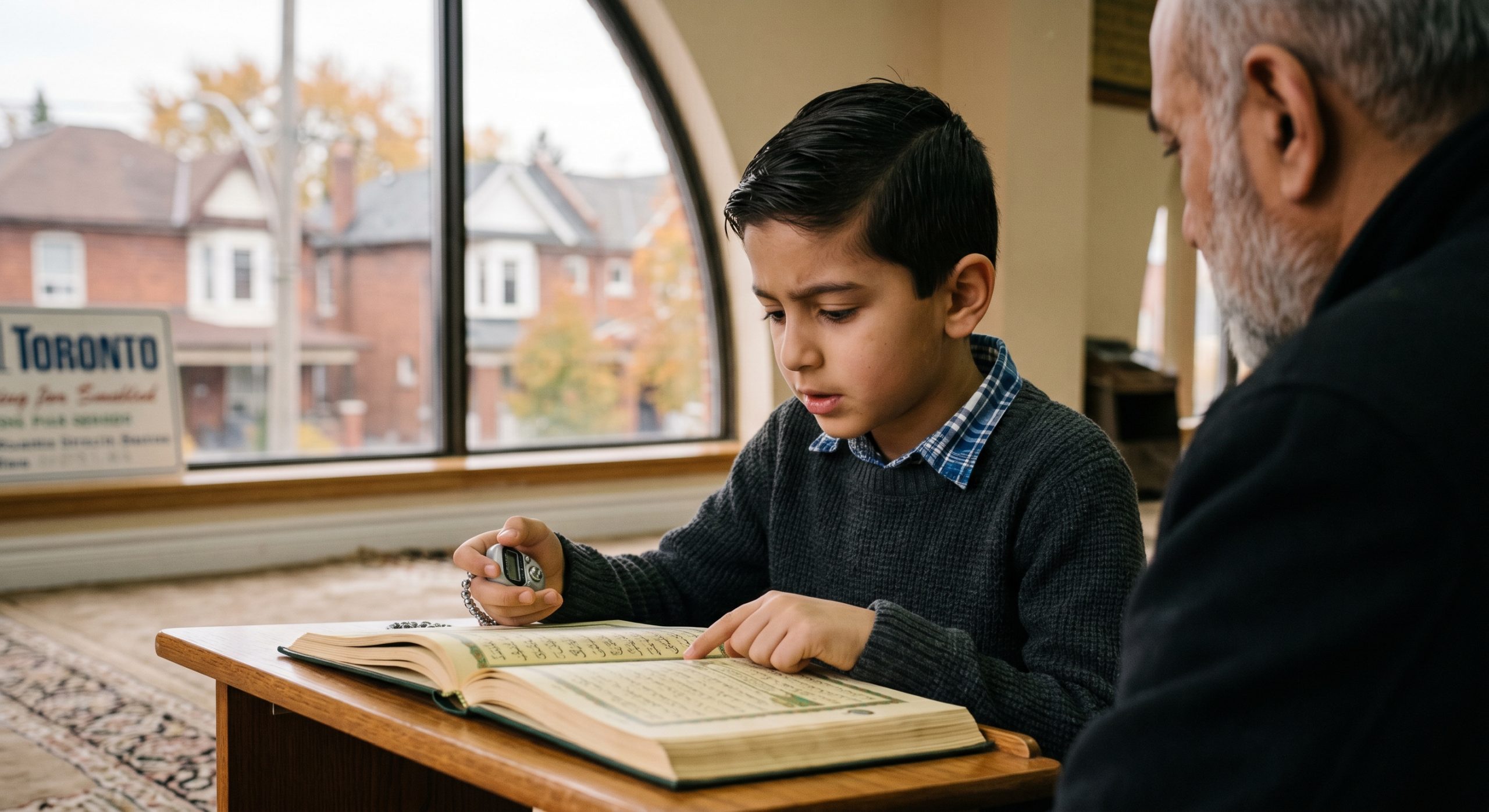
How a 9-Year-Old in Toronto Changed My Understanding of Hifz Forever
His name was Yusuf. His family had moved from Lahore to Toronto three years earlier, and his parents were desperate. Every Hifz school in their city had a two-year waitlist. The local masjid offered weekend classes, but the teacher had forty students and couldn’t give Yusuf the individual attention he needed.
Then they tried an online Hifz program. Within eighteen months, Yusuf had memorized twelve Juz. His tajweed was sharper than kids who had been in traditional madrasas for years.
I’ve spoken with hundreds of families navigating this journey. And I’ll tell you something the traditional crowd won’t admit: online Quran memorization, done right, often outperforms in-person programs. Not sometimes. Often.
This guide covers everything — platforms, methodology, common failures, age considerations, and the honest truth about what makes hifz stick long-term. Let’s go.
What Is Online Hifz and Why Is It Exploding Right Now?
Online Hifz is the structured memorization of the Quran through live or recorded digital sessions with a qualified teacher. It combines traditional methodology with modern scheduling flexibility.
Here’s what’s fueling the growth: there are an estimated 10 million Muslims in Western countries who have no access to a qualified Hifz teacher within commuting distance. The COVID-19 pandemic forced thousands of traditional institutes online between 2020 and 2022. Most of them never went back — because the results were surprisingly strong.
Platforms like Quran Academy, Mishkah Academy, Quranic, and Al-Azhar Online have collectively enrolled over 500,000 students since 2019. That number is not a coincidence. It reflects a genuine shift in how Islamic education is delivered.
But here’s what I find fascinating: the dropout rate for online Hifz is actually lower than for traditional madrasas in many studies. A 2022 internal report from one major platform showed a 73% course completion rate — compared to the 40-55% completion often cited for full-time residential programs.
Why? Personalized attention, flexible scheduling, and parental involvement. We’ll unpack all three.
Is Online Quran Memorization Actually Effective? The Honest Answer

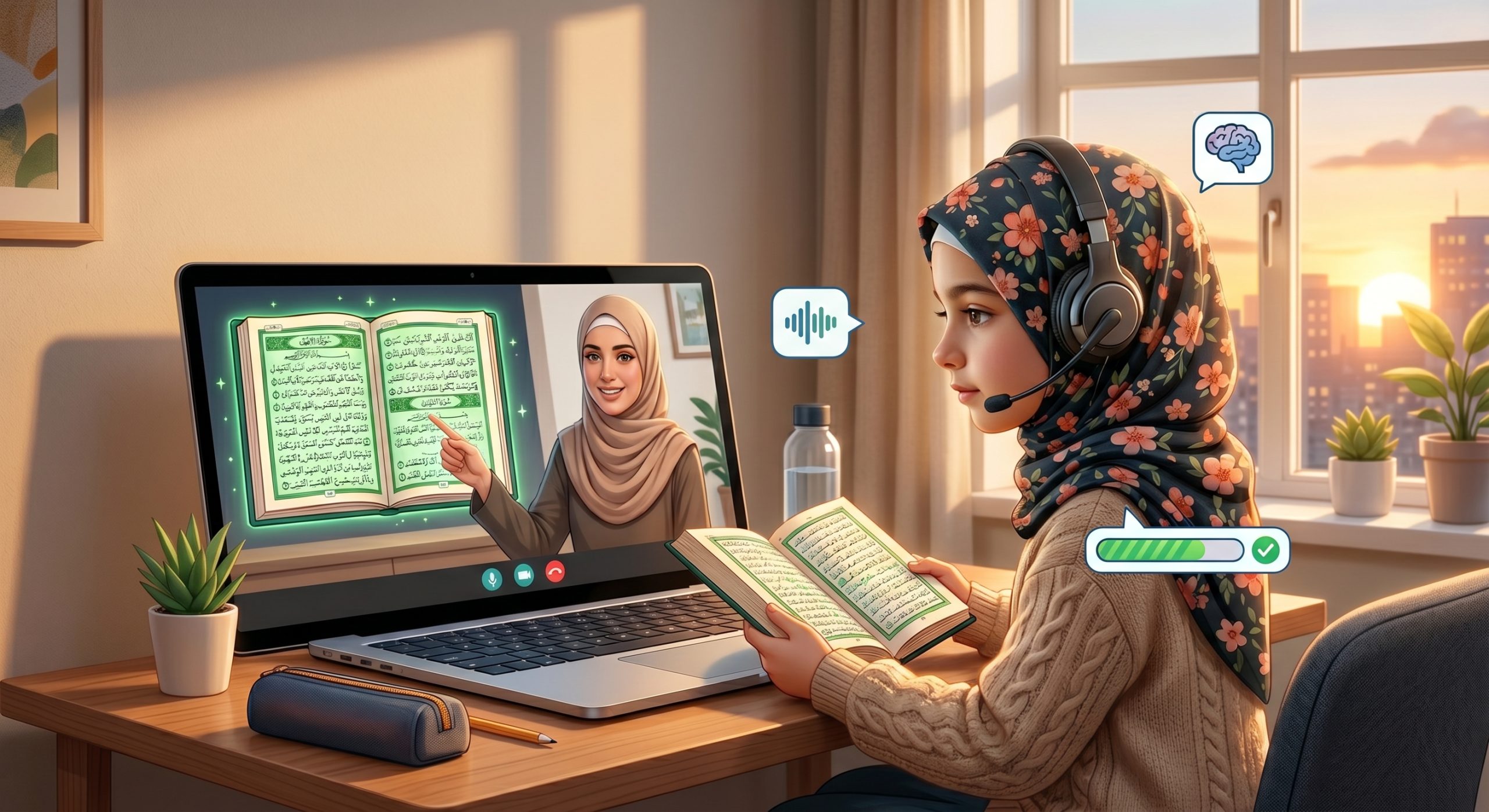
Let me give you the answer competitors won’t: it depends entirely on the student’s age, home environment, and teacher quality. Not the platform. The teacher.
I’ve seen students complete Hifz online with flawless tajweed. I’ve also seen students waste three years clicking through poorly designed apps with no human accountability. The technology is neutral. The human element is everything.
What research tells us: A 2021 study published in the Journal of Islamic Education Research found that students with weekly live teacher interaction retained 40% more material at the six-month mark than those using self-paced recorded lessons alone. That single data point should shape every decision you make in this guide.
Online works. But “online” doesn’t mean “on YouTube.” It means live, structured, accountable instruction delivered through a screen.
The Best Online Quran Memorization Platforms Compared (2025 Honest Review)
I’ve personally evaluated seven major platforms. Here’s what I found, with no affiliate bias.
Quran Academy charges approximately $35–65/month depending on session frequency. Their teacher vetting process is strong — teachers hold ijazah from recognized institutions. The interface is clean, scheduling is flexible, and their student portal tracks progress well. Weakness: their customer support response times can stretch to 48 hours.
Mishkah Academy runs slightly higher at $50–80/month. Their curriculum is more structured with written assessments alongside memorization. I’ve spoken with three families who completed full Hifz here. All three praised the consistency of their assigned teachers, which is not always guaranteed on other platforms.
Quranic (the app-based platform) offers a freemium model with premium plans around $20–40/month. It’s best for beginners and young children building a foundation. It’s not, in my honest view, sufficient as a standalone Hifz program for serious memorizers. Use it as a supplement.
Al-Azhar Online caters primarily to Arabic-speaking students but has expanded English instruction since 2022. Pricing starts around $45/month. Their teachers have exceptional credentials. The platform interface, however, feels dated compared to competitors.
Tarteel AI deserves a special mention. It’s not a full Hifz program — it’s an AI-powered recitation tool that listens to your recitation and identifies errors in real time. At roughly $10/month, it’s the best revision tool I’ve encountered. Use it daily alongside a live teacher program.
Bayyinah TV offers extensive tafsir and Quranic Arabic content but limited structured Hifz support. Include it for contextual understanding, not memorization tracking.
Quran Teacher Live is one I recommend less frequently. Their teacher pool is large but inconsistency in teacher quality has been a recurring complaint across multiple Reddit threads and parent Facebook groups I’ve monitored.
The honest recommendation: Mishkah or Quran Academy for primary instruction, Tarteel AI for daily revision, Quranic app for young children under eight.
How to Structure Your Daily Hifz Routine Online (The Method That Actually Works)
Here’s where most guides fail you. They tell you to “memorize consistently.” That’s useless advice. Let me give you the actual structure.
The most effective online Hifz routine follows a three-part daily model used by traditional scholars for centuries, now adapted for digital learning.
-
New lesson (sabaq): 20–40 minutes in the morning, ideally after Fajr. This is where you learn new verses. Never exceed one page for beginners. Serious adult memorizers can push to two pages, but only after testing retention from the previous day.
-
Recent revision (sabaq para): 30–45 minutes. Review everything memorized in the last 30 days. This is the section most students skip — and it’s why most students fail. New memorization without constant recent revision is like writing in sand before a wave hits.
-
Old revision (manzil): 20–30 minutes. Divide the Quran into seven equal portions and cycle through each portion over seven days. This keeps older memorization sharp.
Total daily commitment: 75–115 minutes. Anyone who tells you Hifz is possible in 20 minutes a day is selling you something.
For online students specifically, I recommend scheduling your live teacher session during the sabaq phase. Have your teacher verify new memorization, correct tajweed, and assign the next portion. Your sabaq para and manzil revision can happen independently.
The Tajweed Problem Nobody Talks About in Online Hifz
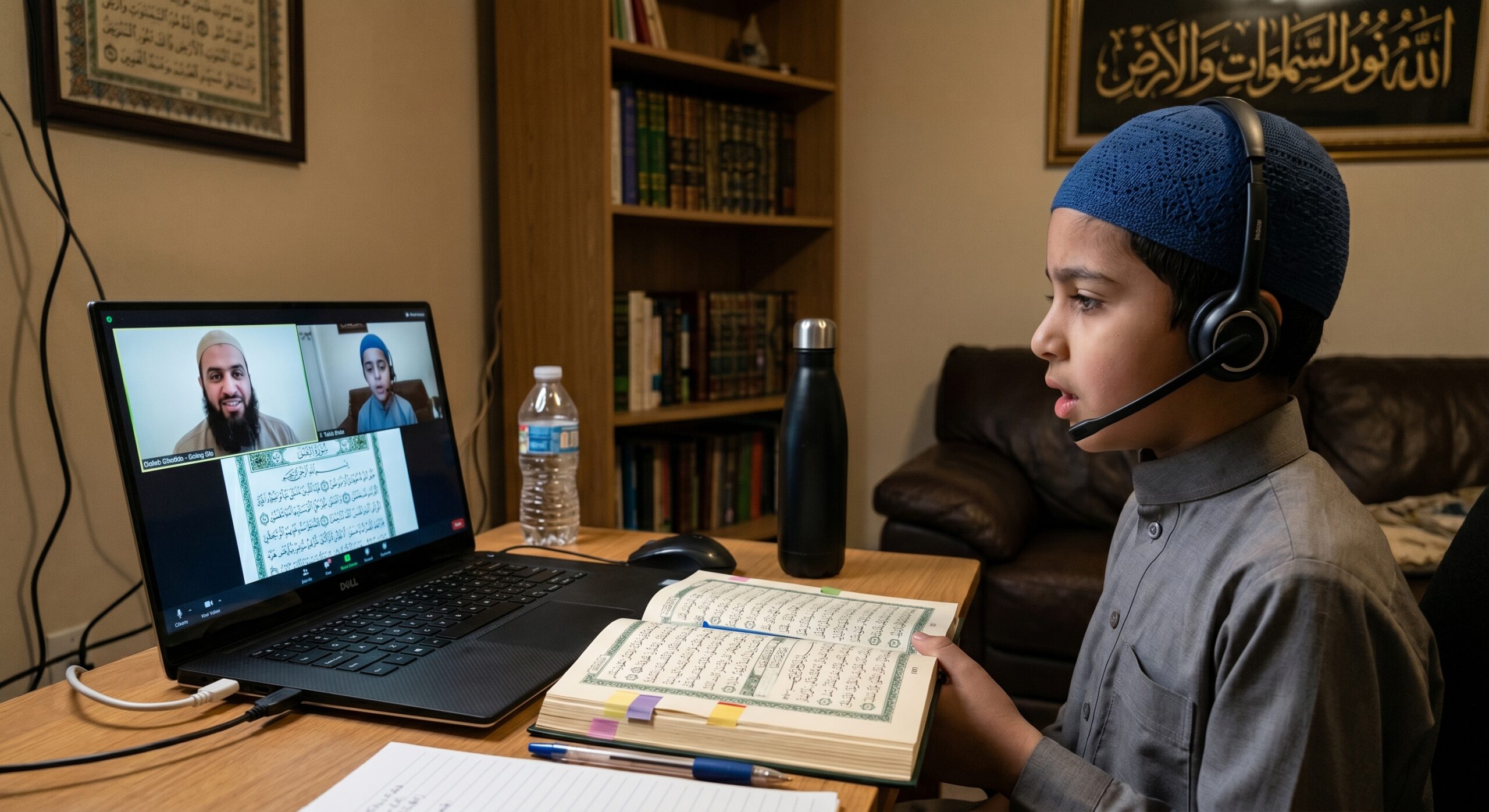
Here’s a controversial opinion I’ll stand behind: most online Hifz programs underemphasize tajweed because it’s harder to teach and evaluate digitally. And this is creating a generation of hafiz who can recite quickly but with significant pronunciation errors.
A hafiz with weak tajweed is like a surgeon who passed written exams but skipped practical training. The credential exists. The craft doesn’t.
When evaluating any online program, ask this specific question: “How does your teacher assess and correct tajweed in real time?” If the answer is vague, keep looking.
The gold standard for online tajweed assessment involves teachers using screen-sharing software to display Arabic text while listening to recitation. Errors are marked, explained with Arabic phonetic rules, and re-tested in the following session. Platforms like Mishkah Academy build this into their standard workflow. Many others don’t.
The Makharij problem: Most tajweed errors involve makharij — the precise points of articulation for Arabic letters. The letters Dhad, Za, Qaf, and Ain cause consistent difficulty for non-native speakers. A good online teacher will have you record short recitation clips between sessions for asynchronous review. If your teacher only listens during live sessions, you’re missing 80% of the feedback window.
Age-by-Age Hifz Strategy for Online Learning
The one-size-fits-all approach to online Hifz is wrong. Age fundamentally changes the methodology.
Ages 5–8
At this age, memorization happens through repetition and song. Children this young cannot yet connect meaning to text. The most effective approach uses short surahs with melodic recitation. Sessions should be 15–20 minutes maximum. Platforms with gamification elements work well here. Do not pressure formal assessment. The goal is love, not volume.
Ages 9–14
This is the golden window. The brain’s neuroplasticity is at its peak for language acquisition and memorization between ages nine and thirteen. Students in this range can memorize one to two pages daily with proper structure. Online programs work exceptionally well here because the child gets undivided teacher attention — something impossible in a classroom of twenty students.
One family I worked with had their eleven-year-old complete twelve Juz in fourteen months through a structured online program with daily 45-minute sessions. The key was consistency, not intensity. Five days a week, every week, no exceptions except illness.
Ages 15–25
Teenagers and young adults bring motivation but also distraction. The online environment requires stronger self-discipline at this age. I recommend co-accountability structures — a friend or sibling memorizing alongside you, even through a separate screen. The social element that traditional madrasas provide needs to be deliberately recreated online.
Adults over 25
This is where online Hifz is, frankly, the only realistic option for most working professionals. Adult memorizers face slower initial retention but demonstrate superior long-term consolidation — meaning what they learn, they keep. Realistic expectations: half a page to one page per day. Full Hifz completion in four to six years with consistent effort. Anyone promising faster timelines without full-time commitment is being dishonest.
The Biggest Mistakes Online Hifz Students Make (I’ve Watched All of Them)

I’ll be direct here because the sugarcoated version doesn’t serve you.
-
Mistake one: Changing teachers too frequently. Every teacher has different pronunciation preferences within acceptable tajweed rules. Switching teachers mid-memorization creates inconsistency that is genuinely difficult to resolve later. Commit to one teacher for at least six months before evaluating.
-
Mistake two: Neglecting revision for new memorization. New verses feel exciting. Revision feels tedious. Students consistently over-prioritize new learning. The result is rapid acquisition followed by catastrophic forgetting. I’ve seen students who had memorized fifteen Juz retest at ten Juz eighteen months later because revision was neglected.
-
Mistake three: Using translation as a crutch without using it as a tool. Here’s a nuanced point. Understanding meaning genuinely accelerates memorization — research supports this clearly. But students who translate word by word during memorization sessions slow their recitation fluency. The solution: study translation and tafsir separately, outside memorization sessions. Let meaning inform your memorization without interrupting its flow.
-
Mistake four: Inconsistent session scheduling. Online learning’s flexibility is its greatest strength and its greatest danger. Families who schedule sessions at a fixed time each day retain 60% more material at the three-month mark than those who schedule “whenever works.” Treat Hifz sessions like a doctor’s appointment. They are not optional.
-
Mistake five: Skipping the written component. Writing verses from memory is one of the most underused revision techniques in online Hifz. The act of physically writing Arabic text activates different neural pathways than oral recitation. Fifteen minutes of daily written revision can increase long-term retention by 25–30%, according to language acquisition research from the University of Edinburgh.
How to Choose the Right Online Quran Teacher (The Questions to Ask)
Teacher selection is the most important decision in your Hifz journey. Here is what I ask on behalf of families I advise.
-
Ask for their sanad — the chain of transmission connecting their ijazah back to the Prophet. A qualified teacher should be able to provide this without hesitation. If they cannot, that is a significant red flag.
-
Ask how many students they currently teach and what their maximum is. A teacher managing more than twelve to fifteen online students simultaneously cannot give adequate individual attention.
-
Ask specifically about their assessment methodology. How do they track student progress between sessions? What happens when a student plateaus? Do they have a structured curriculum or do they follow the student’s pace?
-
Request a trial session before committing financially. Every reputable platform offers this. Use the trial session to evaluate not just their knowledge but their patience, their communication style, and their ability to explain errors constructively rather than simply noting them.
Motivation, Burnout, and the Spiritual Dimension of Online Hifz
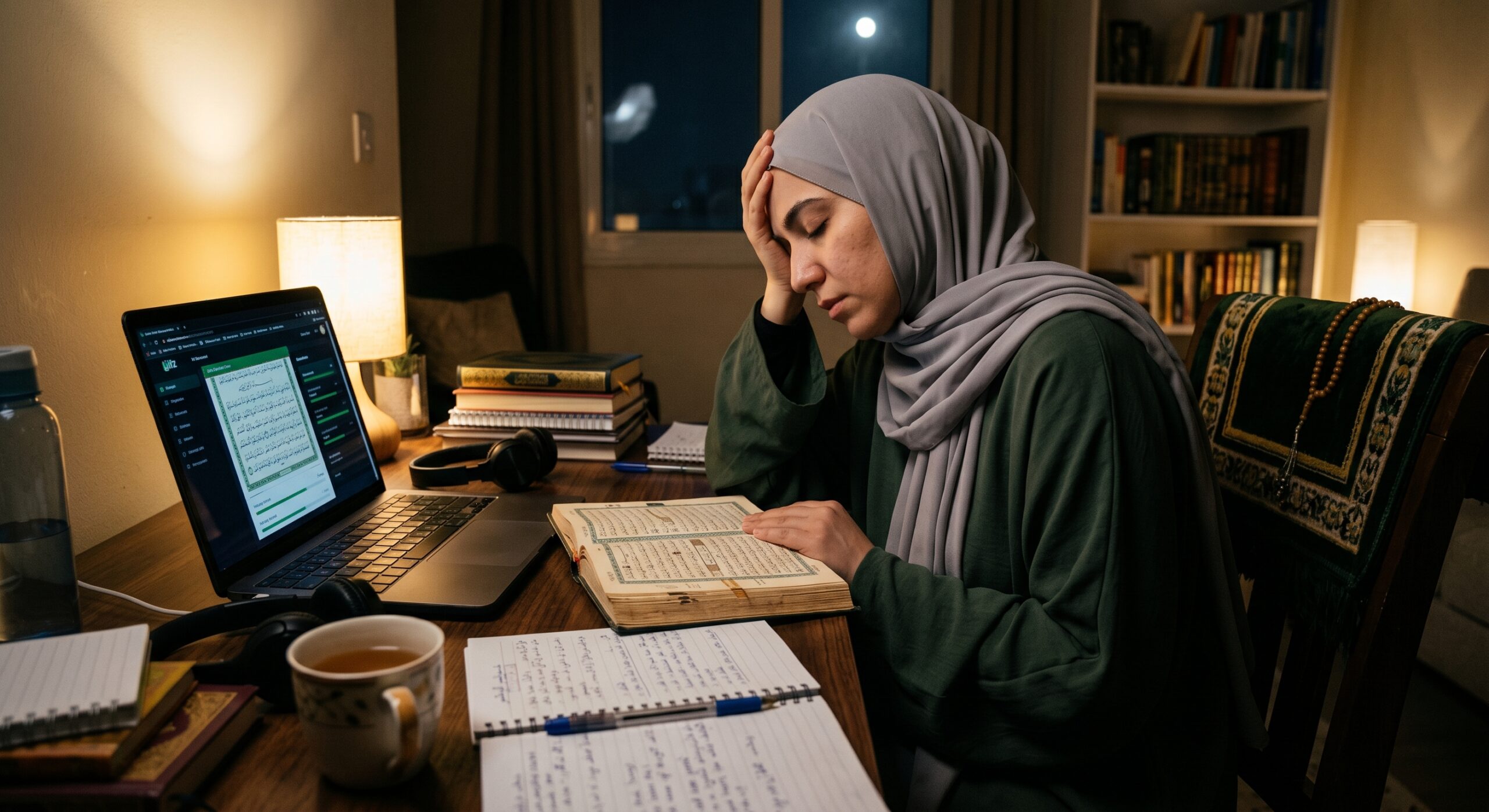
Here is what most platform marketing ignores: Hifz is not just an academic exercise. It is an act of ibadah, and it will test you spiritually in ways that a memorization schedule cannot prepare you for.
Every serious hafiz I have spoken with describes a period somewhere between Juz eight and Juz fifteen that feels like hitting a concrete wall. New memorization becomes difficult. Old memorization feels fragile. Motivation drops sharply. In traditional madrasas, the community and the physical environment provide structure through this period. Online students face it largely alone.
My recommendation is deliberate: build a small accountability community before you hit this wall. Two or three other online Hifz students at similar stages, connected through a WhatsApp group or weekly Zoom check-in. Share progress, share struggles, recite to each other. The community does not need to be large. It needs to be consistent.
The spiritual dimension also means reconnecting regularly with intention. Why are you memorizing? Write it down. Revisit it monthly. Students who maintain a clear, documented niyyah show measurably better long-term persistence than those operating on vague motivation.
Frequently Asked Questions About Online Quran Memorization
How long does it take to complete Hifz online?
Realistically, two to four years for children with daily structured sessions, four to seven years for adults balancing work and family. Anyone promising full Hifz in under two years for part-time students is setting unrealistic expectations. Quality memorization that holds for a lifetime matters more than speed.
What equipment do I need for online Hifz classes?
A stable internet connection of at least 10 Mbps, a device with a working camera and microphone, a physical Mushaf matching your teacher’s edition (most programs use Hafs or Warsh narration — confirm before purchasing), and a quiet, dedicated space. A secondary device playing white noise can help block household interruptions during sessions.
Can girls complete Hifz online with male teachers?
This depends on family preference and scholarly opinion. Many families are comfortable with this arrangement when a parent or mahram is present during sessions. Many platforms now offer female-teacher options specifically for this reason. Mishkah Academy and Quran Academy both maintain separate female teacher rosters.
Is online Hifz recognized by Islamic institutions?
Increasingly, yes. Many institutions now accept Hifz completed online provided the student can demonstrate fluency through in-person testing. The ijazah itself is typically granted after an in-person or live online examination regardless of how the Hifz was completed.
What is the best age to start Hifz online?
The neurologically optimal window is age seven to twelve. However, adults complete successful Hifz regularly. The question is not whether you can — it is whether your daily structure supports the commitment required.
How much should online Hifz classes cost?
Expect to pay $35–80/month for quality live instruction from a platform with vetted teachers. Individual private tutors on platforms like Superprof or Preply may charge $15–40/hour. Be skeptical of programs below $25/month for live instruction — the economics do not support adequately compensated, qualified teachers at that price point.
What the Next Five Years of Online Hifz Will Look Like

I’ll make a prediction based on where the technology and the community are heading. AI recitation tools like Tarteel will become sophisticated enough to provide near-real-time tajweed feedback without human intervention for common errors. This will free human teachers to focus on subtle articulation issues, spiritual guidance, and personalized revision strategy — the things AI genuinely cannot replace.
Platform consolidation will also occur. The current fragmented market of fifteen to twenty competing platforms will likely reduce to five or six dominant players by 2028 as investment concentrates and quality standards rise.
What will not change: the irreplaceable role of the human teacher in providing accountability, spiritual mentorship, and the transmission of knowledge through a living chain. Technology is infrastructure. The teacher is the foundation.
Your Next Step
If you take one action after reading this, make it this: request a trial session from two different platforms this week. Not one. Two. Compare the teachers, the structure, and your child’s or your own response to each. The right program will feel different immediately.
Hifz is one of the most demanding and most rewarding journeys in Islamic education. The fact that it is now available to a nine-year-old in Toronto, a working mother in London, and a retired professional in Karachi through the same quality instruction — that is genuinely remarkable.
What has been the biggest obstacle in your own Hifz journey? I’d genuinely like to know, because the answer shapes everything about how this guidance continues to evolve.