Quran with Translation: The Complete Guide to Reading, Understanding, and Connecting with Every Verse
The Moment a Translation Saved a Marriage
Nadia was thirty-two years old, sitting in a marriage counselor’s office in Houston, Texas. The counselor — a Muslim woman with twenty years of practice — had asked her a question she wasn’t expecting: “Do you read the Quran with translation?”
Nadia recited Quran daily. She had since childhood. But she had never consistently read it with translation. She recited the Arabic the way most of us do — beautifully, faithfully, and without understanding a single word.
The counselor handed her a copy of Surah Ar-Rum, chapter 30, verse 21. The verse about Allah placing love and mercy between spouses. She asked Nadia to read it slowly, in English, three times.
Nadia told me two years later that she cried for twenty minutes in that office. Not because the verse was new — she had recited it hundreds of times. But because she had never known what she was saying.
This is what reading Quran with translation does. It turns recitation into conversation. It turns obligation into relationship. And it changes everything about how you experience the most important book in your life.
Why Reading Quran with Translation Is Not the Same as Reading Translation Alone
Here is the distinction that most guides completely miss, and it matters enormously.
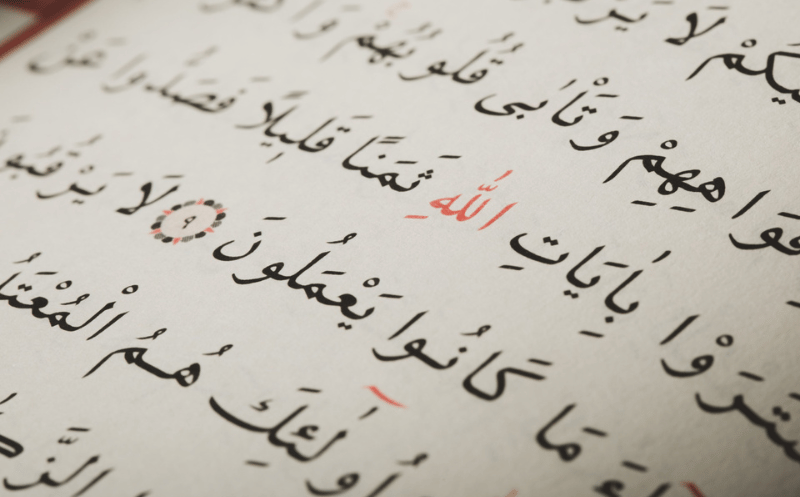
Reading Quran with translation means engaging with the Arabic text and its meaning simultaneously. You recite or read the Arabic, you understand what you are saying, and the two experiences reinforce each other. The sound of the Arabic and the weight of the meaning arrive together.
Reading translation alone means reading someone else’s interpretation of a text you have no direct access to. You receive the meaning but not the language. You understand the content but not the experience.
Both are valuable. They are not the same thing. And the person who reads Quran with translation — Arabic and meaning together — consistently reports a qualitatively different experience from either practice alone.
This is not a subjective impression. A 2020 study from the International Islamic University Malaysia found that students who studied Quran with paired Arabic-translation instruction showed 34% stronger long-term retention of both linguistic content and theological meaning compared to students who studied Arabic recitation and translation in separate, unintegrated courses.
The integration is the point. Always has been.
Which English Translation of the Quran Should You Actually Use?
This question generates more debate in Muslim communities than almost any other practical Islamic question. I have a clear opinion, and I will give you the reasoning behind it.
There is no single “best” translation for all purposes. Different translations serve different needs, and the most sophisticated approach uses two or three together rather than committing exclusively to one.
Here is an honest assessment of the most widely used English translations as of 2025.
Saheeh International
is my primary recommendation for most English-speaking readers approaching Quran with translation for the first time. The language is clear and contemporary without being colloquial. It is accurate, widely reviewed by scholars, and free on major platforms including Quran.com. Weakness: it occasionally prioritizes literal accuracy over readable English flow, which can make some passages feel slightly stiff.
The Clear Quran by Dr. Mustafa Khattab
was released in 2016 and has become one of the most widely distributed English translations globally. Its readability is genuinely excellent — the English flows naturally without sacrificing theological accuracy. It includes brief parenthetical context notes that help readers understand references without requiring separate tafsir. For readers who want a single, readable, trustworthy translation, this is my top recommendation. Available in print from approximately $18–25.
Yusuf Ali’s translation
carries enormous historical weight and beautiful literary English. First published in 1934, it remains widely used particularly among South Asian Muslim communities globally. The language is elevated — sometimes beautifully so, sometimes obscurely so. For contemporary readers approaching Quran with translation without prior Arabic study, Yusuf Ali can feel dated and occasionally difficult to follow. Best used as a secondary reference for its extensive footnotes rather than as a primary reading text.
“Whoever reads a letter of the Book of Allah will have a reward, and that reward will be multiplied by ten.”
— Prophet Muhammad ﷺ (Tirmidhi)
Pickthall’s translation
was the first English translation by a native English speaker who was himself Muslim, completed in 1930. Scholars praise its faithfulness to the Arabic. General readers often find its archaic English (“thee,” “thou,” “hath”) creates unnecessary distance from the meaning. Best used by those with specific interest in early English Islamic literature.
Abdel Haleem’s translation
(Oxford World’s Classics, approximately $12) is widely used in academic settings and praised for its contemporary, readable English. It occasionally makes interpretive choices that some scholars contest, but for general reading, it is excellent. The Oxford edition includes a helpful introduction and notes.
The practical recommendation: use Saheeh International or The Clear Quran as your primary text, keep Yusuf Ali accessible for its footnotes and poetic expressions, and use Quran.com or the Muslim Pro app to toggle between translations when a verse feels unclear in one rendering.
How to Actually Read Quran with Translation:
A Practical Daily Method
Most people who decide to read Quran with translation make the same structural mistake. They try to read it like a novel — start at Al-Fatiha, read forward, make it to page twenty, get overwhelmed, and stop.
The Quran is not structured like a novel. It was revealed over twenty-three years in response to specific circumstances, questions, and human situations. Reading it linearly without context produces confusion rather than clarity.
Here is the method that consistently produces the deepest engagement for new readers of Quran with translation.
Start with the short surahs of Juz Amma — the thirtieth and final section of the Quran. These are the surahs most Muslims already recite in daily prayer. Beginning with familiar Arabic text and adding translation to it produces an immediate, personal experience of meaning connecting to recitation. When you discover what Surah Ad-Duha is actually saying — after years of reciting it without comprehension — the impact is unlike anything a linear reading from Al-Baqarah can produce.
After three to four weeks in Juz Amma, move to Surah Al-Baqarah — not because it comes second in the Quran, but because it contains the longest sustained legislative and narrative passages, and engaging with it early builds the contextual vocabulary for understanding the rest of the text.
Alongside daily reading, use tafsir — Quranic commentary — to understand context. Ibn Kathir’s tafsir, available in condensed English form through Darussalam publications (approximately $45 for the four-volume set) and free on websites like Quran.com, provides historical and linguistic context that transforms confusing passages into clear guidance.
For daily habit formation, the most effective structure is fifteen minutes of focused reading with translation after Fajr. Not rushing through pages. Fifteen focused minutes with one to two pages of Arabic text, its translation, and a brief note about what struck you. In one year, this habit produces a complete reading of the Quran with meaningful engagement — not just page-turning.
The Digital Tools That Make Quran with Translation More Accessible Than Ever
The landscape of digital Quran resources has transformed since 2018. What required purchasing multiple expensive books can now happen on a single phone screen, for free or at minimal cost.
Quran.com
is the most comprehensive free web resource for reading Quran with translation. It offers over fifty English and non-English translations, side-by-side Arabic and translation display, audio recitation from multiple reciters, and word-by-word translation features. For someone beginning to read Quran with translation, it removes every logistical barrier. Completely free.
Muslim Pro
(free with premium at approximately $3/month) integrates Quran with translation into a broader Islamic practice app that includes prayer times, a Qibla compass, and Ramadan features. The translation library is solid, the interface is clean, and the ability to bookmark specific verses for daily reflection makes it useful for habit-building. The premium version unlocks offline access, which matters for consistent daily use.
iQuran Pro
($4.99 one-time purchase, iOS and Android) is a dedicated Quran app with excellent Arabic typography, multiple translations, and audio recitation. Many users prefer its cleaner interface to Muslim Pro for focused reading. The audio-text synchronization — where the Arabic text highlights in real time as the recitation plays — is particularly useful for learners connecting Arabic sound to meaning.
Tarteel AI
(approximately $10/month) is primarily a tajweed correction tool, but its verse identification feature — which listens to recitation and immediately displays the verse with translation — creates an unusual and genuinely useful bridge between recitation practice and meaning engagement.

For physical copies, the Al-Quran Al-Kareem with English Translation and Transliteration published by Darussalam (approximately $20–30 depending on size) remains the most practical single-volume format for those who prefer print. The side-by-side Arabic and English layout, combined with transliteration for non-Arabic readers, makes it accessible to a genuinely wide range of users.
Understanding Surah by Surah:
The Context That Changes Everything
Here is what most guides about reading Quran with translation skip entirely: the asbab al-nuzul — the circumstances of revelation. These are the specific historical contexts in which individual verses were revealed, and they transform reading from abstract interpretation to living history.
When you read Surah Al-Inshirah (94) with translation — “Did We not expand your chest for you, and remove from you your burden that had weighed upon your back?” — and you know it was revealed during one of the Prophet’s periods of greatest personal difficulty and self-doubt, the verse becomes something entirely different. It is not a general statement about divine comfort. It is a specific, personal message from Allah to a man who was struggling, transmitted fourteen centuries ago and arriving fresh in your reading today.
This is the dimension of Quran with translation that goes beyond language learning. The Quran speaks into specific human conditions. Its wisdom is not generic encouragement — it is precise, targeted, and remarkably aware of the specific textures of human struggle. Understanding context reveals that precision.
Safi Khan’s “The Quran: With Annotated Interpretation in Modern English” (approximately $35) is among the most accessible single-volume resources for contextual reading, combining translation with brief historical notes on each surah’s circumstances of revelation. For readers who want context without committing to a full multi-volume tafsir, it is the best available option.
The Case Study That Changed How I Think About Translation for Children
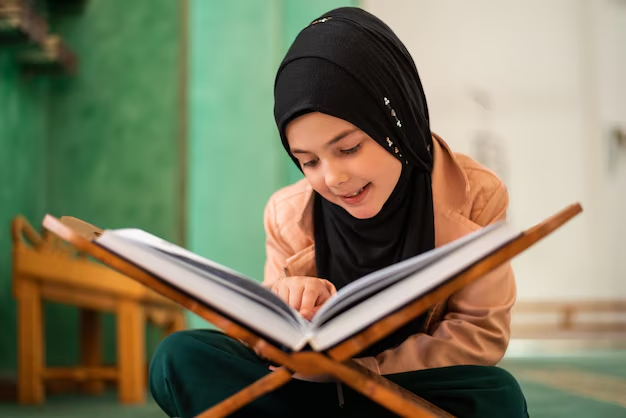
Rania enrolled her seven-year-old daughter Hana in an online Quran class in early 2023. The class focused entirely on Arabic recitation — correct pronunciation, tajweed basics, and memorization of short surahs.
Hana progressed well technically. By the end of six months, she had memorized eight surahs with acceptable tajweed. But she had no relationship with what she was reciting. When Rania asked her what Surah Al-Asr meant, Hana shrugged. “I don’t know, it’s just what we say.”
Rania began spending ten minutes each evening reading the translation of whatever surah Hana had memorized that day. They would discuss it together — what it meant, why Allah might have said it, how it applied to things that happened at school that week.
Three months later, Hana asked, unprompted, to learn the translation of Surah Al-Fatiha “because we say it so many times.” When Rania read her the translation and explained that Al-Fatiha was a conversation — that when you recite it in prayer, Allah responds to each verse — Hana sat quietly for a moment and then said, “We should say it slower then.”
Why Ramadan Is the Best Time to Commit to Quran with Translation — and Why That Logic Is Partly Wrong
Here is the honest, slightly counterintuitive take: Ramadan is an excellent time to begin reading Quran with translation, but the common Ramadan pattern — reading one Juz per day to complete a full khatm — actually works against deep engagement with meaning.
Racing through one Juz daily produces quantity. It does not reliably produce understanding. Many Muslims complete the full Quran in Ramadan and retain very little of what they read because the pace prevented meaningful engagement with translation.
A better Ramadan approach: read half a Juz daily with full translation engagement, completing the Quran over two Ramadans rather than one. In the same time, pair recitation with fifteen minutes of tafsir from Mufti Menk’s accessible Ramadan tafsir series on YouTube, or with the Bayyinah Podcast which covers Quranic themes conversationally.
The goal of reading Quran with translation is not to reach the last page. It is to have the Quran reach you. Speed and depth are genuinely at odds in this practice.
Frequently Asked Questions About Reading Quran with Translation
Scholarly opinion is divided on this. The ruling requiring wudu (ritual purity) applies specifically to the Arabic Mushaf — the Quran in Arabic text. Most scholars hold that translated texts or books containing translation alongside Arabic may be handled without wudu, though maintaining wudu as a matter of respect is recommended. Digital versions on phones and tablets are generally treated differently, with most contemporary scholars holding that no wudu is required for digital Quran access.
Abdel Haleem’s Oxford translation or The Clear Quran by Dr. Mustafa Khattab are most consistently recommended for non-Muslim readers. Both use contemporary English, avoid jargon, and include brief contextual notes that help readers without prior Islamic knowledge follow the text. Yusuf Ali’s archaic language can create unnecessary difficulty for readers approaching the Quran for the first time.
Yes. The scholarly consensus is that women during menstruation may read Quran translation, recite Quranic verses for dhikr or protection (such as Ayat al-Kursi), and engage with Quranic meaning. The restriction applies specifically to formal recitation from the Arabic Mushaf. Digital Quran apps are generally considered permissible to use during this time as well.
Two is the practical maximum for most readers. More than two translations open simultaneously creates comparison paralysis rather than deeper understanding. The most effective approach is one primary translation for continuous reading and one secondary translation consulted when a verse feels unclear or particularly significant.
Reading translation does not carry the specific reward of Arabic recitation described in hadith — the reward of ten hasanat per Arabic letter. However, reading translation with the intention of understanding Allah’s message carries its own reward as an act of seeking knowledge and deepening faith. The two practices are complementary and both rewarded, not competing.
The Letter You Have Been Receiving Without Opening
The Quran describes itself, in Surah Ibrahim (14:1), as “a Book We have sent down to you so that you might bring mankind out of darkness into light.” Not a book to be carried. Not a book to be recited over the deceased. Not a book to be placed on a high shelf and occasionally touched with reverence.
A book to bring people out of darkness. Into light. Through understanding.
Nadia, the woman from Houston whose story opened this guide, completed reading the entire Quran with translation fourteen months after that counselor’s office moment. She told me it took her that long because she kept stopping — not from boredom or difficulty, but because she kept finding verses that felt like they had been written specifically for her situation, her struggles, and her questions.
“I kept thinking,” she said, “how did I go thirty-two years not knowing this was in here?”
You do not have to wait another year. Start this week with Juz Amma — the short surahs you already recite in prayer. Open any of the translation resources discussed in this guide. Read three surahs with their translation. Then ask yourself what Nadia asked herself.
What has been waiting for you in the book you have been carrying all along?
Which surah — if you read it with full translation and context for the first time today — do you think would surprise you the most? That question is worth sitting with.
Book Your Free Trial
Class Today
- No credit card required
- First class is free
- Female teachers 24/7
- Cancel anytime